How the Commerce crackdown on Anthropic could impact the Pentagon: Experts
By imposing export controls on the bug-hunting AI Mythos/Fable 5, the Commerce Department has complicated the Pentagon’s already fraught relationship with Anthropic.
The “National Security Presidential Memorandum” urges closer collaboration with AI companies — as long as they’re compliant with Pentagon demands — and orders a sweeping revision of Biden-era guardrails on military AI.
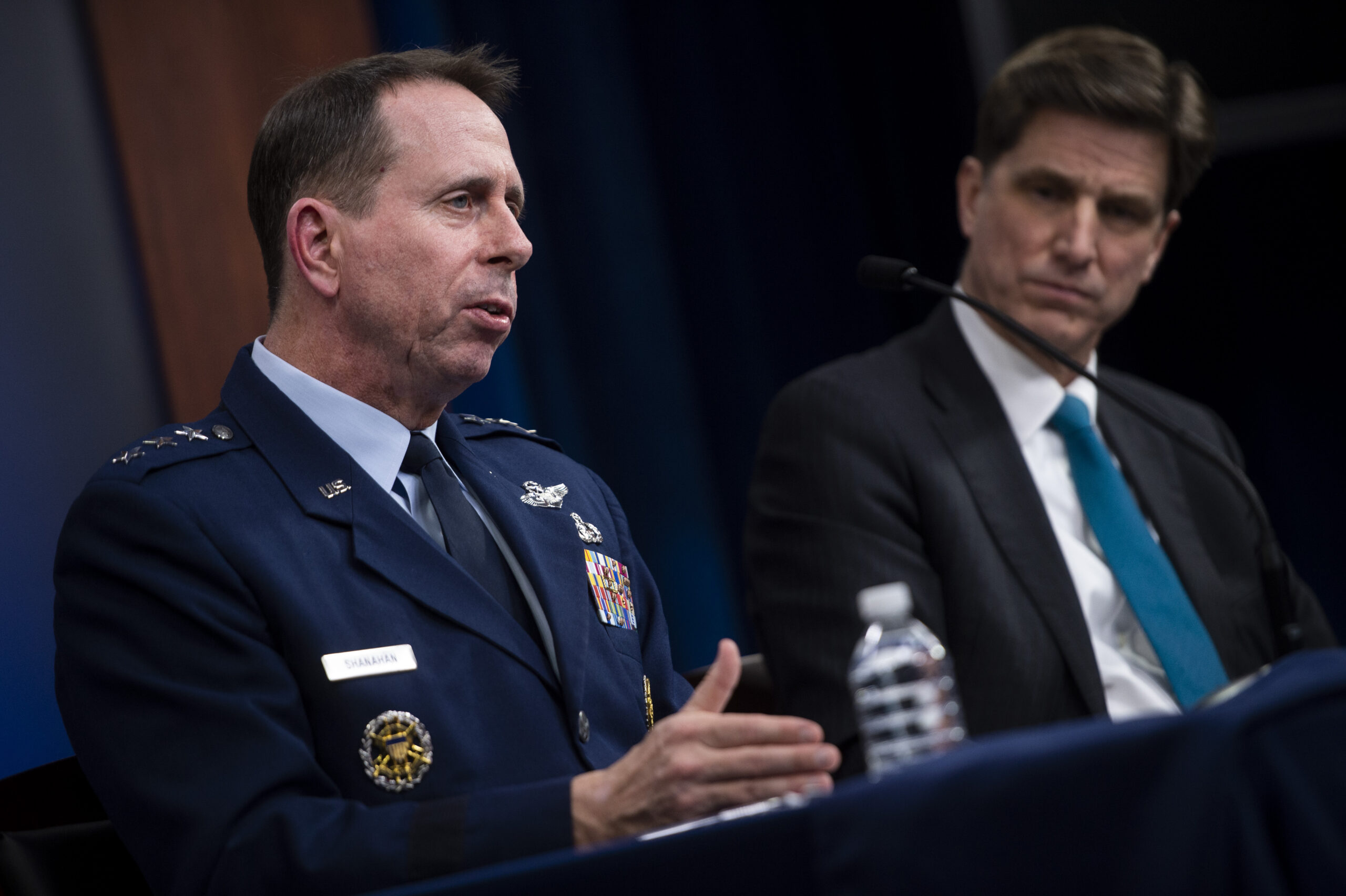
“The bubble is real,” said the founder of the Pentagon’s Joint AI Center, retired Lt. Gen. Jack Shanahan. “[But] for the DoD, there could be new opportunities to partner with all kinds of tech companies…if their commercial opportunities start to evaporate.”
“We’re now going to see agentic cyber defenses deployed against agentic cyber attacks,” said Lt. Gen. Jack Shanahan, founder of the Pentagon’s Joint Artificial Intelligence Center.
The potential of “generative AI” is too big to ignore, say retired generals Jack Shanahan and Mike Groen, who each led the Pentagon's Joint AI Center — but for now, its tendency to “hallucinate” and make up information is “a showstopper.”
The Joint Common Foundation will put a standard set of tools in the cloud, where any Defense Department AI project can use them.
Despite past battles over Project Maven and other military uses of AI, “Google and many others” are now working with the Pentagon’s Joint Artificial Intelligence Center, its new acting director says.
"There are a lot of autonomous systems in DoD today. There are very few, and I would say really no significant, AI enabled autonomous systems," says Shanahan, who is trying to change that.
The Joint Artificial Intelligence Center needs three things: new acquisition authorities, more staff, and the cloud. With JEDI delayed ‘potentially many more months,’ director Lt. Gen. Jack Shanahan said, he’s turning to an Air Force alternative.
Writing regulations will take months. Convincing industry and academia to trust the military to handle AI ethically could take years.
The RAND report, commissioned by the Joint Artificial Intelligence Center, unsurprisingly recommends more power for the JAIC over future service budgets. Right now AI efforts are so diffuse no one's even sure what's in the 2020 appropriations bill just passed.
The military has all the data it needs to train machine learning algorithms for war – somewhere. Now the Joint AI Center has to find it all and clean it up. The goal: AI Ready data.
Google wants to move beyond the ‘frustrating’ criticism of Project Maven and work closely with the Pentagon’s year-old Joint AI Center, senior VP Kent Walker said.
The Joint Artificial Intelligence Center won't automate nuclear response -- but it is working towards AI on conventional weapons and leery of arms control.